
Conditions
this essay was originally written in Slovenian and published in the Literatura review in April 2024
translated by the author
People tell me that Spanish moss (Tillandsia usneoides, Spanish lichen, grandpa’s beard) is an invasive, parasitic plant. They tell me it was brought to America by the Spanish on their ships, and found such favorable climate conditions here that today its thorny waterfalls gush from the oaks and cypress trees of the American South, lazily sapping their juices until the drained trees buckle under its weight. It has only its beauty to thank for saving it from eradication. The landscape of trees, interwoven with grayish-green tufts of hanging cobwebs, evokes the pleasant sensations of the Caribbean and the swamp, of wooden cabins on stilts hidden deep in the jungle and sustained on pure sorcery, where everything has not yet succumbed to the monoculture of industry and concrete. In places where Spanish moss hangs from the trees, perhaps magic can still be found.
I think about this as I run along the sidewalks of Jacksonville at sunrise, ducking from the grasping fingers of the hanging moss that could easily pluck out my earphones. It is over seventy degrees by six in the morning, and just an hour later, the humidity makes running impossible. I run from Springfield, a neighborhood of neat neo-Colonial houses, to the city center, past city hall, the museum, and the library, then, at the Wells Fargo tower, I turn onto the Main Street Bridge and cross the St. Johns River, running along the reddish and beige paving stones of the embankment to the statue of the lonely sailor, where I catch my breath for a moment, gaze into the murky river, and delight in the agile gliding of dolphins on the surface. On the muggy horizon, the sun detaches from the earth into a complete circle. It is hot. I run back. Cops are harassing a group of young bums who pitched a tent on the sidewalk during the night. I catch the scent of unwashed bodies; I observe their disheveled beards, the girls' natural dreadlocks, their eyes gleaming with the outraged mirth of the free. The cops are all wearing sunglasses. I run on.
I picture it in my mind: the first tuft of moss was brought to America by some homesick sailor in the crew of Ponce de León, the captain who sailed into the impenetrable thickets of La Florida to find the Fountain of Youth. Instead, he found the natives, the Calusa tribe, who fiercely resisted his curiosity and wounded him so severely with an arrow that he had to flee, dying shortly thereafter in Cuba. But not before one of his sailors chucked a fistful of moss from the deck into the jungle, burdening the trees of the New World with deadly finery, and with this gesture of wrath or despair, transforming the visual landscape of an entire continent.
Back in the house, I wake up Mickey, a hard-of-hearing Cavalier King Charles Spaniel, and take him for a walk through the neighborhood. Small groups of people in the park are playing disc golf. In all the front gardens, there are yard signs reading "Black Lives Matter," rainbow "Springfield Pride," and "Everyone Is Welcome Here." Curtains of Spanish moss sway in the all-too-rare gusts of wind. The dog drags me back into the cool of the house where the air conditioner hums without pause.

I will be spending three months here, taking care of the house and dog of the painter Kobaslija, who has retreated from the tropical Florida summer with his brushes and canvases to the luminous air of the Swiss Alps. I am alone, the master of my days, and I will be writing a novel. The conditions are ideal.
/
“Should I create a TikTok account and spend half an hour each day dancing in a tight-fitting shirt in front of my phone with my novel in my hands? Should I publish the novel as an NFT?”
When I am not writing the novel, I mostly read. Ever since I published my first novel, I have been plagued by a single problem. How to make one novel create the conditions for the next one. Everything I have tried so far, more or less blindly, by inspiration, or by feeling, has not led to the desired outcome. The time has come to tackle the problem in the most thorough way I know. I will read a whole stack of books.
Soon, I read so many that I can no longer distinguish between what I already knew and understood, and what I have newly learned. Merchants of Culture by John B. Thompson contains the entire history of Anglo-American publishing from the twentieth century to the present day. In Book Wars, the same author writes about the development of publishing in the digital environment. Knowledge is power, they say, and I suppose I am becoming powerful, though I still have no idea how to convert this power into a solution to my problem.
Should I create a TikTok account and spend half an hour each day dancing in a tight-fitting shirt in front of my phone with my novel in my hands? Should I publish the novel as an NFT? Should I start my own print-on-demand publishing house and sign a contract with the post office for distribution … but who will help me with the marketing? How expensive are the PR-gurus? All my ideas for promotional campaigns are slightly kooky, most would need to be looked over by a lawyer. Yes, I would need a lawyer and an agent and a manager, perhaps some security guards and debt collectors, and also, why not, a few bunnies for the red carpet, a couple of snow leopards on a chain and a troupe of clowns. Anything would be preferable to the weekly coffee with the editors and publishers, where I would adamantly appear as reliable and responsible and amicable and threating to absolutely no one.


In any case I find all this knowledge slightly useless. My business is literature; what use do I have for segmenting an audience and the long tail of Kindle Direct Publishing, the details of author’s contracts and the economic perspective of the avant-garde. What I am interested in is how to write a successful book that has not been written before and would never exist without me, and not how to write a book that would be sufficiently similar to another bestselling book to exploit its stream of attention and use the few errant drops from it to water my own. And I do not consider the artisanal novel to be bad, I am just slightly saddened it represents the pinnacle of pleasure to so many people.
(In the meantime, I read Mann’s The Magic Mountain. Riding my bike to the area called Five Points I stop at a statue in Memorial Park, dedicated to the 1700 Florida men who gave their lives in the First World War. Perhaps one of them caught a glimpse of Hans Castorp in the trenches.)
Then I read the histories of the legendary American publishing houses and the memoirs of their editors. The magnificent world of the publishing Mad Men unfolds, everything is in wood and leather, there is much drinking and smoking, the typewriters clatter deep into the night and for decades they only publish white men. Roger Straus is a Guggenheim heir, and his house can afford to mess around the market up until the nineties: Susan Sontag is the tastemaker there and she turns down Eco’s The Name of the Rose. With the help of contacts from The Paris Review founders (ahem), Farrar, Straus & Giroux publishes a few European authors, some of which then go on to win the Nobel prize.
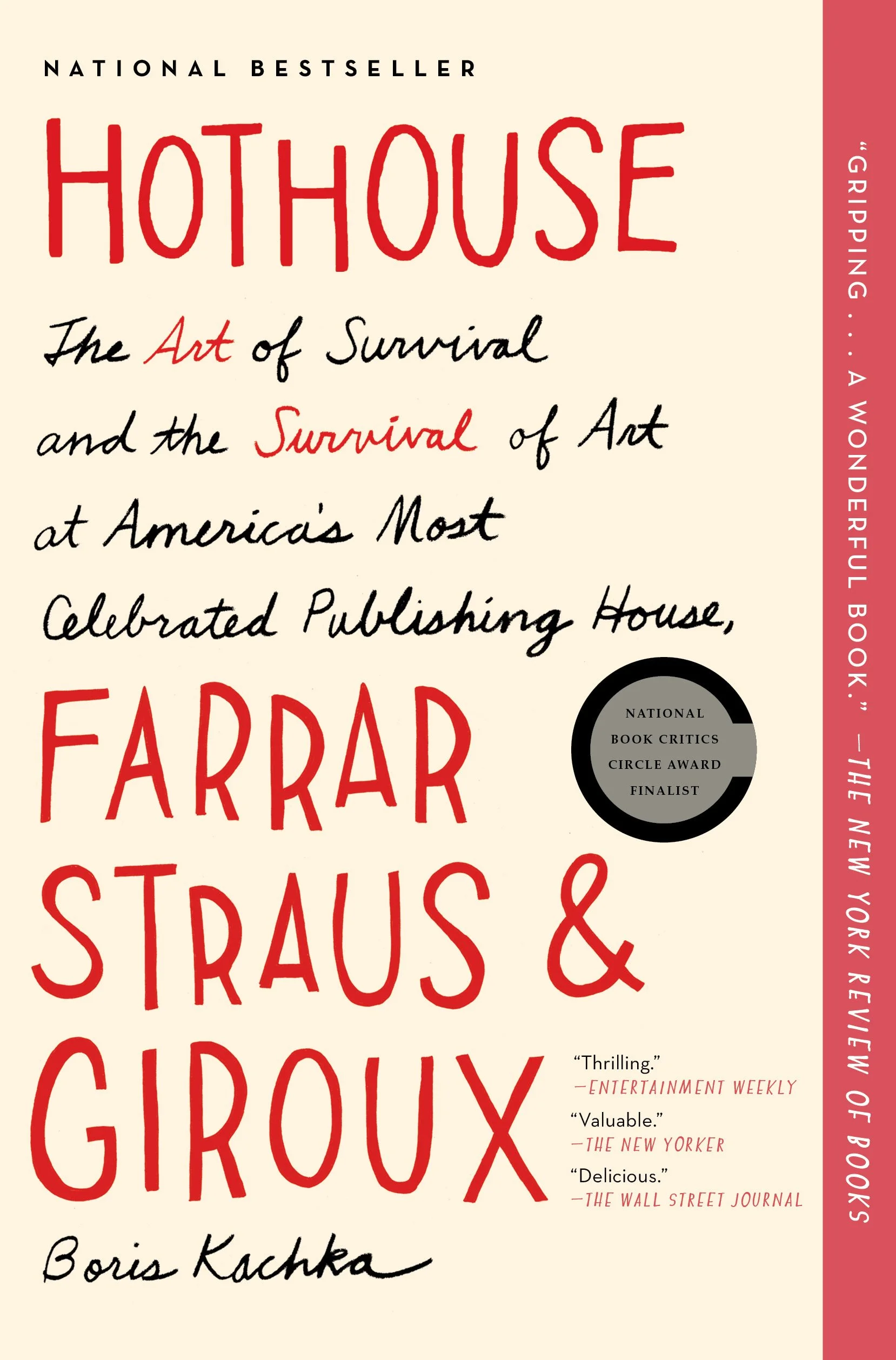
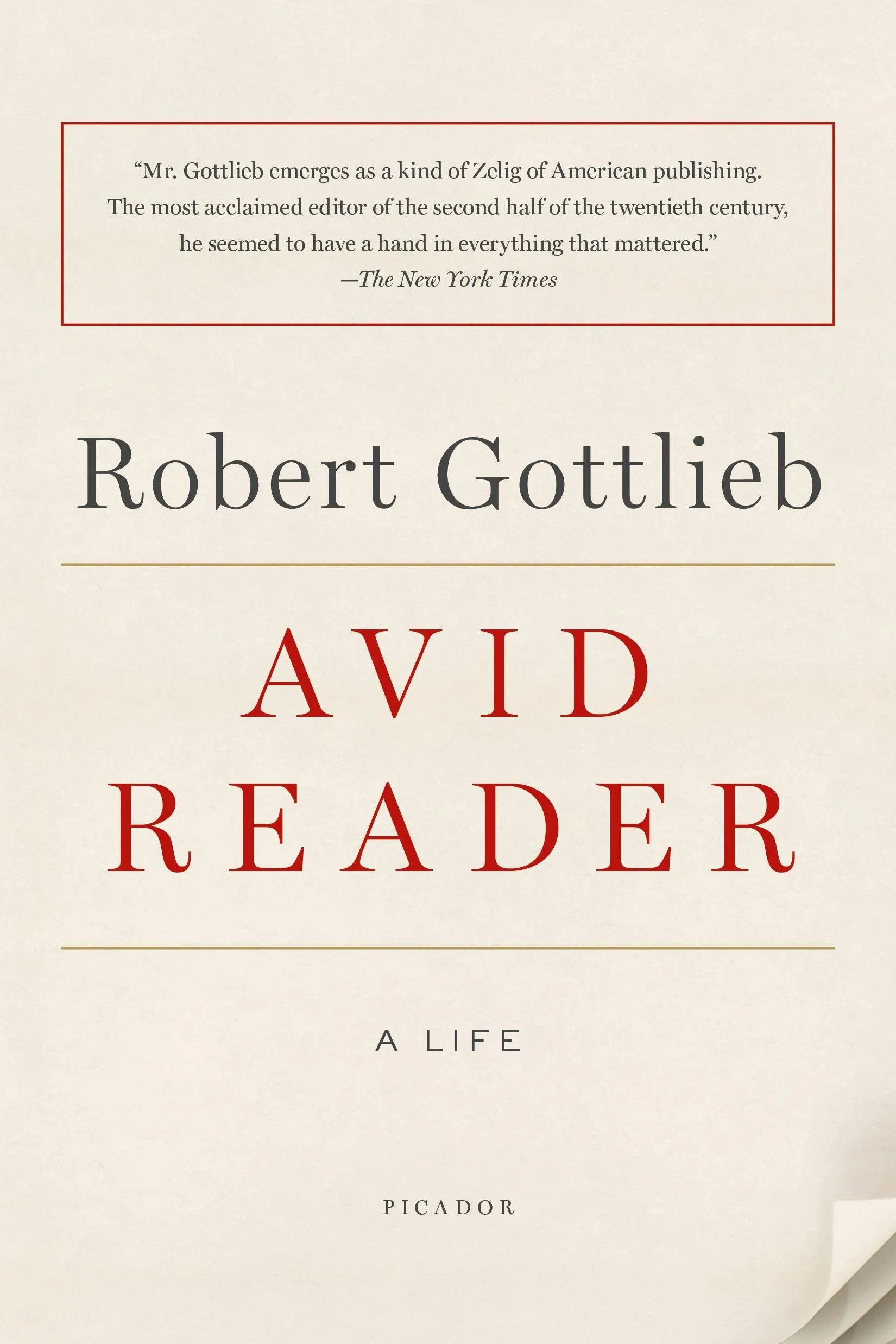

Meanwhile, Robert Gottlieb at Simon & Schuster and Knopf gets to publish anything that grabs his attention, from pulp fiction to Catch 22, even securing the twenty-two after the original eighteen finds itself on another recently published novel. He is known for working on manuscripts together with the authors all throughout the night. I suspect one of the reasons he wrote his memoir is that his coworker at S&S, Michael Korda, published his own a few years before. Their memories contradict at several places. The long life of humanist activity playing out in a gentlemanly duel over the last word. I will remember the memoir of Daniel Menaker primarily over his bitter refrain that he was screwed out of stock options when The New Yorker was sold to the Condé Nast group. The things that weigh down our souls.
What does this all mean for me? What have I learned about my problem? I am not a cosmopolitan Jewish New Yorker, and no matter how much I wrack my head I fail to see how a Slovenian writer’s novel could attract their attention. What is the thing that a central-eastern-Balkano-European young democratic perspective could offer them? Is this even a correct question to ask? What can I offer as a millennial author from across the pond, bound to this earth by different constitutions, with differently regulated food in the supermarkets (with much less corn, Americans eat so much corn), coming from a bubble of history that is relatively ancient and with regards to the size of the world almost intimate, who spent so many years in an environment without guns, pickup trucks, or racial diversity? What kind of a cultural force do the Cleveland Slovenians represent in the United States? How many Americans would be interested in the curiosity that was Yugoslavia; how many there once left it and still miss it today, equating Tito’s federation of socialist republics with their youth?
“What can I offer as a millennial author from across the pond, bound to this earth by different constitutions, with differently regulated food in the supermarkets (with much less corn, Americans eat so much corn), coming from a bubble of history that is relatively ancient and with regards to the size of the world almost intimate, who spent so many years in an environment without guns, pickup trucks, or racial diversity?”
Surely I could write a novel that would build on my specific experiences and knowledge to check enough marks for the liberal curiosity of the progressive New York audience and perhaps succeed in momentarily peeking out from the confusion of cultural histories, but would such a mercenary attitude not resemble the work of someone using a tried and tested genre structure, inscribing a few fresh elements and hoping that the people will accept the novelty as a welcome addition to something they are otherwise already completely familiar with? Like pineapple on a pizza, like ham and tomato sauce in a burek pie. My question is, then, if our unique experience of life in a culture unknown to the wider world is read by someone else as just another twist in a genre.
/
“I create literature, I exist in the global republic of letters, and I participate in the development of an art that has always been shared by the entire human race.”
Because I do not want to flatter a specific segment of the audience, I am not interested in cultural exchange, the dialogue between nations, the respect that the upper middle class of one country shows to the upper middle class of another country. I create literature, I exist in the global republic of letters, and I participate in the development of an art that has always been shared by the entire human race. I will write a novel that every reader, from Kalahari to Karachi, from Phnom Penh to Port-au-Prince, will consider a novelty in the domain of the written word; my sex, nationality, religion, sexual orientation will not matter, the novel will not be a document of its author, his position in historical time or culture, not even of his language, the novel will be important for its sequence of units of meaning, which will in a theretofore unknown, sublime way cast a light on the existence of a human being. Here in Florida, I am removed from all things familiar like a camel in the Arctic. The conditions are ideal.
There are publishing houses that share my beliefs in such a literature, independent from worldly matters. The important word is modernism, the Poundian make it new. I do research. I read the history of Grove Press, the publishing house that brought D. H. Lawrence, Jean Genet, Alain Robbe-Grillet, Samuel Beckett to the United States.

All these authors are giant artists to my mind, I cannot imagine any of them ever gave much thought to the demands of the market, their expression must have been a pure consequence of the needs of their creative genius. But Barney Rosset, the director of the publishing house, skillfully exploits the legal proceedings of countering censorship and turns The Lover of Lady Chatterley into a bestseller after a lengthy trial, and then does the same with Our Lady of the Flowers by Jean Genet. I read a long chapter on choosing the right photograph for the cover of Beckett’s trilogy: how to introduce to a culture, obsessed with the image, a European author whose works echo the great moral crash of Europe after the wars and the holocaust. A black turtleneck, a wrinkle-ridden face, the eyes, staring into the infinity of the inhumane. The book does not sell (perhaps they should have used that photo in profile or put a cigarette in Beckett’s hand), so Rosset decides to stage Waiting for Godot in New York. A theater performance as part of a marketing campaign for a book, why not? He notices that the play is frequented by students, already warmed up by existentialism and now entranced by the theater of the absurd, so he turns his focus to universities and sends the text to the play to student theater groups all across the country. Soon, professors begin to write scholarship on Beckett, their studies convince a few famous authors to admit they consider Beckett an influence, and presto, a literary star is born.

The atmosphere in the house is growing darker, an afternoon tropical thunderstorm is on the way. So, is there in the global literary canon of the postwar 20th century even a single author who was not put there by professional marketers, working with admen and academia? Is literature even literature, the entirety of all texts of above average quality and artistic value, or is literature just that percent of all these exceeding texts that were lucky to be created by someone whose figure at some point served the needs of the dominant culture? The white man from a great European culture who survived the war. The white man from a great European culture who suffered for the subversiveness of his ideas, the misery of his childhood, whose works had exposed the right themes or displayed a style that the academia knew how to interpret as progress, or a worldview that the future had taken for its own, or was at least aware, due to his upbringing and education, which themes or ideas to keep hidden. Will there never be a Slovenian Nabokov, because all our nobility was killed off in the wars? Do we not have a Slovenian Aleksander Hemon simply because we did not spill enough blood during the breakup of Yugoslavia? An ugly question, an unfair question. A curtain of rain is pulled on the quaint streets of Springfield.
/
“Ten months of ideal conditions are required just for the sentences. Structure? Intuition. Content? Ten years of reading, memory and imagination. Material conditions? What remains from the last work, a stipend, an advance on the next book, the cobbling together with random texts and translations that in any case pay only for the time I spent on them or not even that. Mental conditions? Farewell, dear mind.”
There is a wonderful scene in the movie Mulholland Drive by the American director David Lynch, with which every creator in the grips of self-doubt can identify whenever they ponder on how a person comes to success within the contemporary creative industries. In the scene, there are six men in a room, and another behind a glass listening to the conversation through a speaker. A beige envelope containing a photograph of a young actress slides across the table. The oldest man says, this is the girl, and asks for an espresso. The young director protests. His older coworker tries to calm him down. The oldest man’s assistant says it is not a suggestion, but a done deal. This is the girl. Two men praise the espresso to the oldest man, it was ordered especially from him. The waiter brings the cup, the oldest man quietly asks for a napkin and repeats his request. The young director resists. This is the girl. The oldest man takes a sip of espresso and lets it spill from his mouth down the napkin. The two men make excuses, they were told this was the best espresso in the world. The young director is outraged, what the hell is going on. The assistant of the oldest man stands up and lets out a primal scream.

This is how, an author concludes, one achieves success in the contemporary creative industries. There is no discernible logic at play, everything proceeds as in a fever dream, with no reason or luck, not even coincidence. The archetypal images from our lizard brains order the events based on the laws of the primordial world, everything is shamanism, devouring, regurgitation. You enter the formless dark to find the Fountain of Youth, and deadly, poisonous arrows come flying your way, so you chuck a fistful of moss from your homeland into the dark before fleeing, maliciously hoping it takes root.
(When the British acquired Florida after their victory over the Spanish in the Seven Years War in 1763, they quickly built a road leading from St. Augustine – the oldest continuously settled European town on the new continent – to Georgia. The road was called King’s Road and it crossed St. Johns River at the narrowest point of its lower course. Because innumerable herds of cattle crossed the river there, they called the settlement surrounding the narrow point Cow Ford.)
To become D. H. Lawrence, Beckett, Nabokov: is this even possible? Or are these unattainable dreams, dreamt by a man just to set the approximate course of his striving? I will make an effort somewhere in that direction, create what will be made possible for me to create, and then, when I am no longer in this world to be able to ruin something with my life, perhaps at some point with my “work and character” become a useful reference point for a broader cultural enterprise of a certain academic, political, or commercial venture, and thus become etched into the memory of the world for a generation or two as someone that counts. This is where I find the narrowest part of the moon river. This is where I will cross.
But no matter which side I find myself on, my problem remains unresolved. What will it be made possible for me to create? I can get up at five, workout and go for a run, eat healthy, think cleanly, and write well, and yet one of my novels will not create the conditions to write the next one. Five hundred words in the morning, five hundred in the afternoon. Discipline + “keep your calling in mind, suffer without peace”. Five thousand words a week, perhaps three thousand that work. Three months of ideal conditions make for somewhere around forty thousand words. The Ice Saints have one hundred and twenty-five thousand. Ten months of ideal conditions are required just for the sentences. Structure? Intuition. Content? Ten years of reading, memory and imagination. Material conditions? What remains from the last work, a stipend, an advance on the next book, the cobbling together with random texts and translations that in any case pay only for the time I spent on them or not even that. Mental conditions? Farewell, dear mind. Industrial conditions? The balance of power between the publisher and the author is so disproportionate there is always the lingering feeling someone is doing you a favor for deigning to publish your work. The conditions of reception? The novel arrives on a landscape of precarious youth who would much prefer to write novels than reviews and have to force themselves to read the five hundred pages for a pittance, then pretend they can contextualize the work within a culture so opaque, so arbitrary, so dependent on the current mood of the public, that it might as well be completely in the hands of six old men who spend their days drooling with espresso.
(After the British were defeated in the American War for Independence, they returned Florida to the Spanish, who proved unable to set up effective governance on the territory. The Seminole tribe, formed in the 18th century from the remnants of the Florida natives and the other native tribes that were pushed into Spanish Florida by the westward expansion of the United States, by now had the entire peninsula for themselves. They soon began harassing the merchant routes of the American south, attacking plantations and freeing slaves, offering them shelter in Florida. General Andrew Jackson, the hero of New Orleans, was called to pacify the tribe. In an infamously cruel way, and despite the objections of Spaniards who considered this an assault on their empire, he succeeded. The Spanish relinquished Florida to the Americans in 1821, Jackson became the military governor of the newly acquired territory and Cow Ford, where herds of cows might have theoretically spent all this time grazing unperturbed, was renamed, in honor of the cruel man, Jacksonville. In the days I am writing a novel there, the city celebrates its bicentennial with giant fireworks and massive open-air concerts.)

/
“The dog survived, the house is clean and the grass is cut, the novel is advancing nicely, and I have learned nothing.”

The dog survived, the house is clean and the grass is cut, the novel is advancing nicely, and I have learned nothing. I still have no idea how to get one novel to create the conditions for the next one. On one of my final morning walks with Mickey I snip a forearm’s length strand of Spanish moss from a tree to take as a keepsake. I store it in a Ziploc bag. As a responsible person that does not wish to introduce an invasive species into our ecosystem (my carbon footprint is horrible as it is), I do some research while loitering at the airports on my way home.
Tillandsia usneoides, Spanish moss, Spanish lichen, grandpa’s beard, is not a moss, is not a lichen, and is not a parasite. It is an epiphyte, an air plant that does not grow roots in the earth and uses the trees solely for support. It supplies water and food for itself through its leaves and steals none from the tree. Old trees sometimes buckle under its weight and shade, but its presence otherwise generates favorable microclimate to help the trees grow under the scorching tropical sun. And it is not even Spanish. Its home is exactly wherever it can be found: in the Caribbean, the American South, in Central and South America. There is no chance it would spread in the crowns of Slovenian spruces, since the conditions here are lacking: it dislikes the cold. The natives called it “hair of the trees” and the French called it “Spanish beard”, because it resembled the beards of the conquistadors. In time it became Spanish moss. So much for relying on what the people tell me.
Back at home I keep on writing. I am also finishing up my translation of DeLillo’s Libra. I have plenty of work to do, the conditions are fairly reasonable. Still on my hunt for the man behind the publishing curtain I read memoirs of Slovenian publishers: Tone Pavček’s The House of Cankar’s Covenant (or: All my secretaries) and Milan Matos’s The House of Big Stories. I write an essay “A House Without Books”, which gets me yelled at by Uroš Zupan at an opening of a punk exhibition in Cankar’s Home, because I interpreted him writing that he did not get a chance to say goodbye to Tomaž Šalamun as meaning that he did not attend his funeral. I invite him for a beer to clear things up, but he does not respond. The essay goes unaddressed. I am writing. We work through the translation one more time with an editor. With another editor we work through The Ice Saints; I have a few chapters and an ending left to write. I still do not know how the book will end. I take Libra with me to an island in August and work through it again. Under the Perseid showers I am thinking about what to do with the fate of Leon Kalan, the protagonist of The Ice Saints.

/
“An undemanding, formulaic text with a clearly defined audience. A tearjerking, inspirational, tragic, or comically biting tale about a minority in a majority world. A white man from the fringes of society who confronts the world in a way the younger generation finds fresh.”
One day in the fall, I read the news that Dan Sinykin is about to publish a book called Big Fiction, subtitled How Conglomeration Changed the Publishing Industry and American Literature. The thesis of the book is that the economic reality of the publishing industry has a disproportionate influence on the actual content of the literature it publishes. The conditions under which literature is created have a greater impact on the final form of the published novel than the individual author’s vision; this vision only comes to fruition after being sifted through an ever-increasing number of sieves in the publishing production, and the awareness of these sieves informs and warps the authorial conception. A series of feedback loops emerge: authors create with all the market hurdles the novel will have to skillfully clear already in mind, and at each hurdle, all stakeholders in the process exert a highly practical influence on the final version of the text before letting it pass. The thesis interests me; perhaps it will shed some light on my problem.

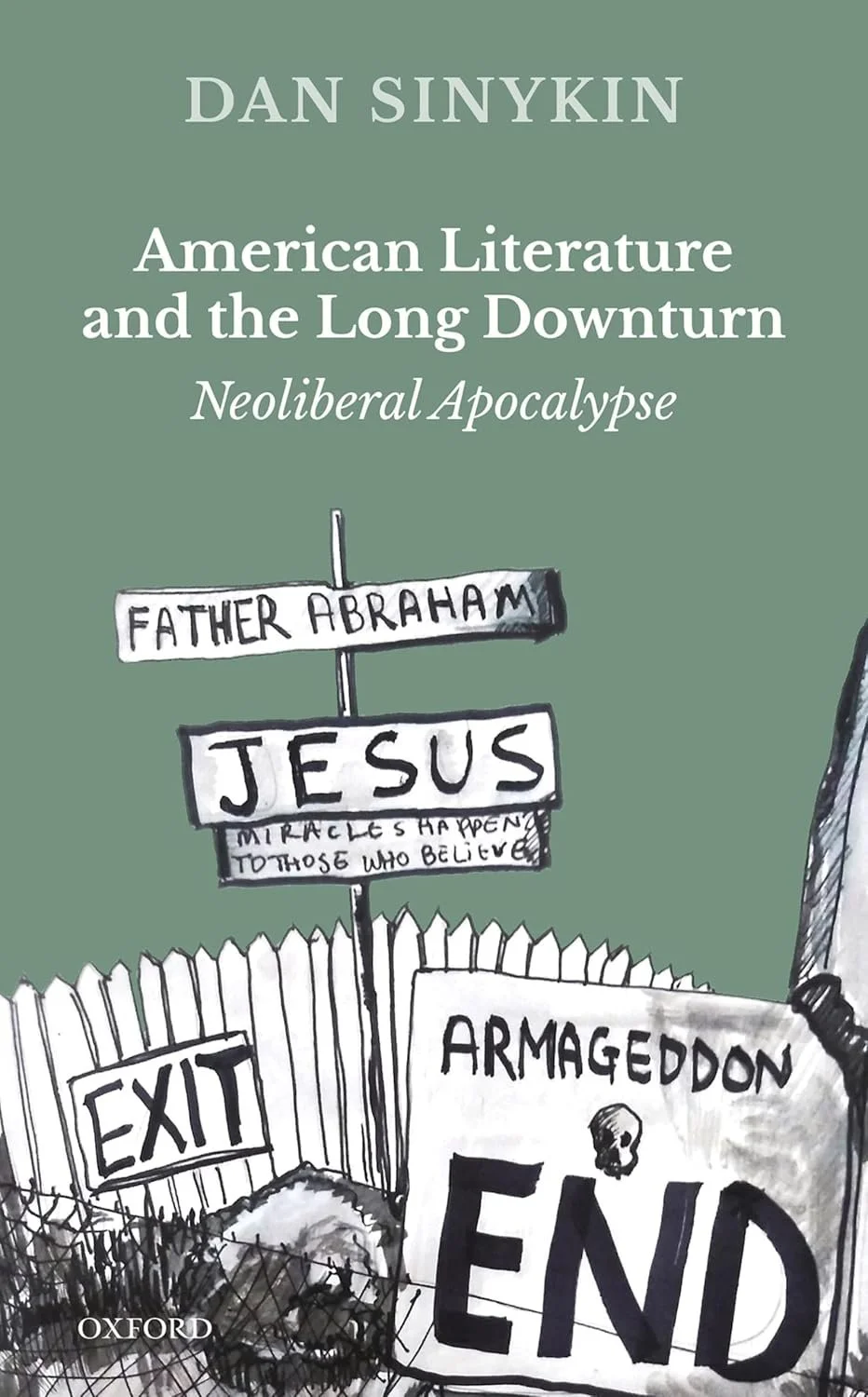
I read the author’s first book, American Literature and the Long Downturn: Neoliberal Apocalypse, in which he interprets literary works through the prism of broader economic factors in American society during the second half of the twentieth century. Authors responded to the dismantling of the social safety net, the shrinking of the middle class, the neoliberal dismemberment of the commons, the degradation of ecosystems, and the apparently unstoppable climate change by fantasizing about the apocalypse and the total collapse of the social order, as the apocalypse seemed the only remaining possibility for things to ever change for the better. The optimism, or even realism, of gradual progress no longer convinced anyone, and disillusioned authors began reaching for destructive fantasies. I am reminded of the famous quote, which appears in many variations and traces a line from Fredric Jameson through Mark Fisher to Slavoj Žižek: it is easier to imagine the end of the world than the end of capitalism.
(In Florida, I watch Crimes of the Future, the new film by Canadian director David Cronenberg: his entire body of work proves he has no trouble imagining the end of capitalism, though it is probably true that we viewers cannot interpret his visions of the future as anything other than the world having ended in the meantime as well.)
In Big Fiction, Sinykin narrows his focus from the economic foundation of the entire society to the more manageable landscape of the publishing industry, exploring the ways its economic structure is reflected in published works – though occasionally with an interpretation that feels slightly too convenient, much like in his first book. He begins his narrative with a brief overview of the history of Anglo-American publishing, which I already know from Thompson’s Merchants of Culture. He identifies a pivotal moment in 1990, when André Schiffrin was fired as the director of the Random House publishing company. Schiffrin is the last of the old guard of publishers who defended their program and authors from the demands of corporate management; who published leftists and aesthetes, and who demonstrated the role of the humanist intellectual by publicly opposing the harshest state policies. After him, among the leading executives of the five – soon to be four – largest publishing houses, which control more than half of the global book market, there is no longer anyone who publicly resists the market as the sole arbiter of literary value.
And yet, the idea of a literary value that does not depend solely on the number of copies sold stubbornly persists. In the eighties, several smaller presses emerged, consciously stepping away from the narrow-mindedness of the New York literary world; each in its own way carried on the mission of publishing good literature whose success is not measured exclusively in sales. All of them exist more or less on the eternal brink of survival, dependent on a small number of literary enthusiasts and the National Endowment for the Arts – which conservative forces will soon completely starve out during one of America's culture wars.
In the nineties, after a long march through academia, the concept of multiculturalism becomes the universal rallying cry of progressive forces, and a few clever publishers get the idea to turn their presses into non-profit organizations, turning to liberal elites to cover their costs. These non-profit publishers become a refuge for minority authors telling their multicultural stories to white America, though they must naturally be careful not to overly agitate their financial backers with potential anger or radical political stances. Thus, authors become public performers of their identities or use satirical barbs to prod the expectations of white readers who want a safe peek through the windows of their non-white neighbors.
(Right around this time, the multi-Oscar-nominated film American Fiction is playing in theaters. It is based on Percival Everett’s novel Erasure, published in 2001, which wittily mocks the white audience's expectations of Black authors' writing.)
Sinykin highlights W. W. Norton as a kind of hybrid. Employee-owned since the sixties, it finances an independent literary program – free from corporate managers – through its textbook division and occasional bestsellers. Here, editors still have the opportunity to convince colleagues with their taste and test the market with novelties that larger houses would ignore. They succeed, for instance, with Chuck Palahniuk’s Fight Club and Irvine Welsh’s Trainspotting, two novels that perfectly capture the anxious aggression of Generation X as it bids farewell to youth.


So, the market, identity, or the cultural moment. An undemanding, formulaic text with a clearly defined audience. A tearjerking, inspirational, tragic, or comically biting tale about a minority in a majority world. A white man from the fringes of society who confronts the world in a way the younger generation finds fresh. Have I actually learned anything new?
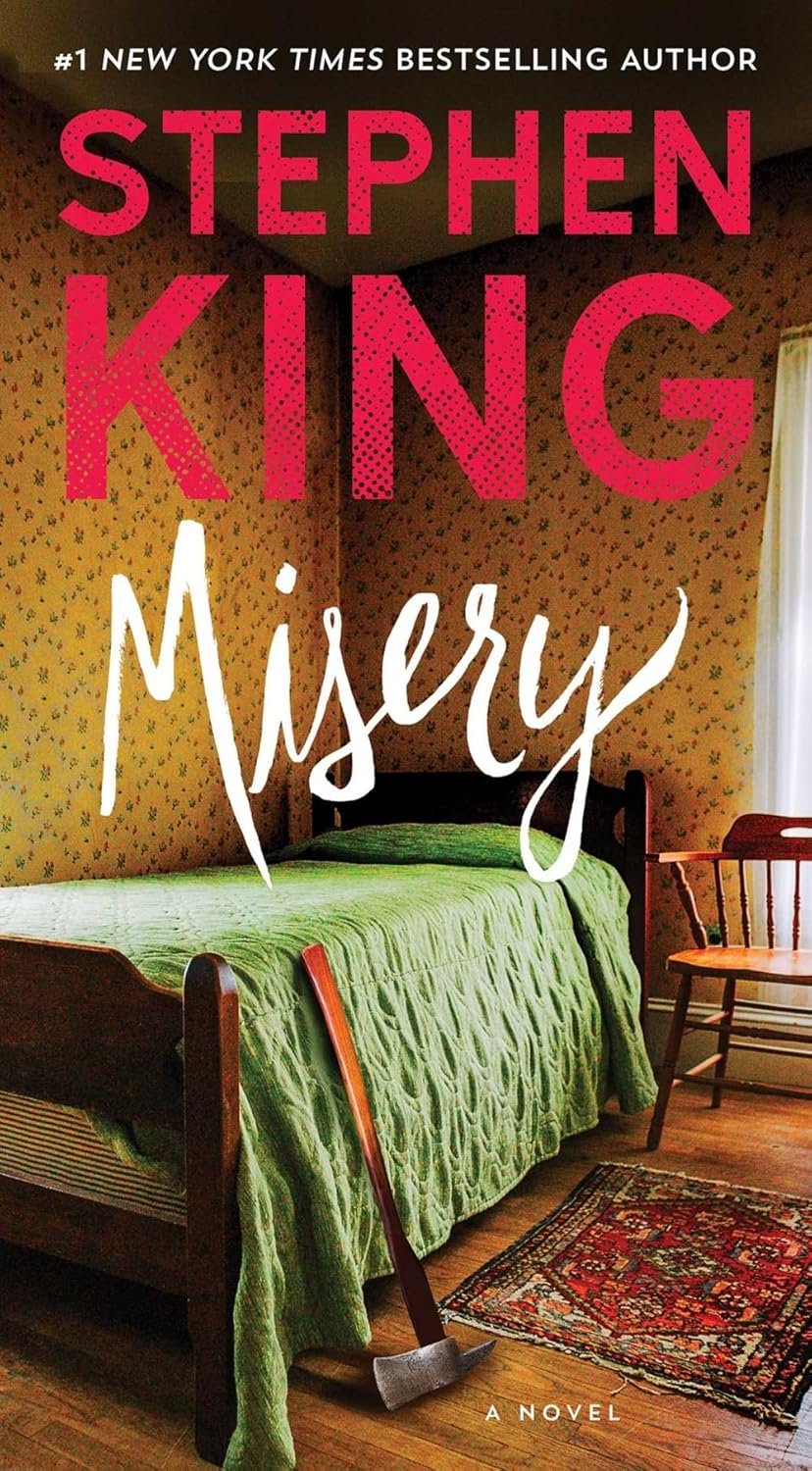
Using examples of authors – like Toni Morrison, who left her editing job at Random House in the early eighties and ended the decade by publishing Beloved, a novel about the permanent scars of slavery after emancipation, in which Sinykin, reading alongside Morrison's memoirs, also sees an allegory of a Black author freeing herself from an extremely white and extremely male publishing industry; Cormac McCarthy, who spent decades in the embrace of art-friendly publishers, writing difficult novels that sold barely a few thousand copies, but who, when the corporate wind swept through in the nineties, hurried up with more readable prose to publish All the Pretty Horses, his first bestseller, which was later adapted into a film starring Matt Damon; Stephen King, who in Misery used the character of crazy fan Annie Wilkes to illustrate the insatiable demands of the industry and the market, before which an author no longer has the right to make their own decisions; David Foster Wallace, who wrote Infinite Jest – a novel about a movie so entertaining that anyone who watches it falls into a catatonic state of bliss – at the peak of the entertainment industry's consolidation, fighting consumerist simplicity with a thousand pages of text and two hundred pages of footnotes, only for his publisher Little, Brown to use a calculated promotional campaign to turn the novel into a bestseller and a generation of readers into a catatonic community unable to tear themselves away from the brick in their hands – Sinykin constantly reminds us that a completely autonomous authorial vision does not actually exist under such conditions, and that literary works are influenced in a myriad of ways by the broader social and production conditions of their creation.



All right. So this is what the contemporary American novel looks like. Writers generally hold an MFA in creative writing, where they acquire a high level of proficiency in language and structure, first sending their texts for feedback to their MFA peers. If the response is good, they find an agent (mostly MAs who swapped creative writing for business administration after a year or two). These agents have a good sense of which editors (PhDs in English) like similar texts, and they tell the author what to change to ensure the editor likes it before offering it to them. The editor then compiles a list of comparable titles and uses their sales figures to convince superiors to sign a contract with the writer via the agent. The editor then shows the text to marketers, who advise on which unsellable wrinkles the writer should still iron out before the manuscript goes through copyediting and fact-checking, and then, wrapped in a market-tested cover, ships to bookstores nationwide. There, the novel will have a week or two to prove itself, while the publisher's publicists take newspaper critics and bloggers out to dinner. The writer receives an advance on royalties in their contract: if the novel sells, it pays off the advance first; if it doesn't, the writer keeps the full advance, which they can use to fund the conditions for their next novel.
Such is the pressure the market system exerts on the final form of the literary novel in the United States, yet in exchange for this endless string of compromises, it provides the author with the conditions to create. We have no MFAs in creative writing in Slovenia, no agents; editors don't have to rely on sales and don't consult marketers, relying instead on their own taste. The literary novel is financed by state subsidies, and the only pressure on it is temporal: if it receives a subsidy, it must be published in the year the subsidy was granted.
/
“I will once again be starting from scratch.”
The Ice Saints must be published in 2023. It is autumn, Libra is heading into copyediting, and I am working on the final chapter of Leon's story. A few drafts exist, but I don't like them yet. I am glad that the fees from the translation and the novel will buy me some time for the next one, and new ideas – which are hard to silence – are already brewing in my head.
For my thirty-seventh birthday, a notice on the state e-tax portal awaits me, demanding I return all the basic monthly income I received during the pandemic. The only condition for receiving the basic income was that you issued a lower value of invoices in 2020 than in 2019. I check my balance sheets. In 2019, with my rich, award-winning, translated writing career, I issued €1,700 in invoices. In 2020, I asked my publisher for an advance on the royalties for Pixels and issued €3,000 in invoices. Even this novel, with its five hundred pages, and the translation, with its six hundred pages, will not create the conditions for the next one after two years of strict discipline. I will once again be starting from scratch – if I can start at all.
Would it be better to become an air plant hanging from a tree, a harmless native decoration of an Alpine landscape, whose eternal silence offers passersby the chance to ignorantly curse it as a parasite and an invasive species? An appealing thought for a moment, perhaps, but one that I use in all its heavy, dark tones the same way I use most of my thoughts: to create. And poor Leon Kalan – the young man from Škofja Loka whom I sent from Jacksonville to France, whom I robbed of his mother from Brooklyn, and whom, for good measure, I beat up twice in Ljubljana from home – finally had to wave goodbye to a happy ending because of the state's trampling over his author's fate.
I'm sorry, Leon. What can I say? The conditions simply weren't there.
